
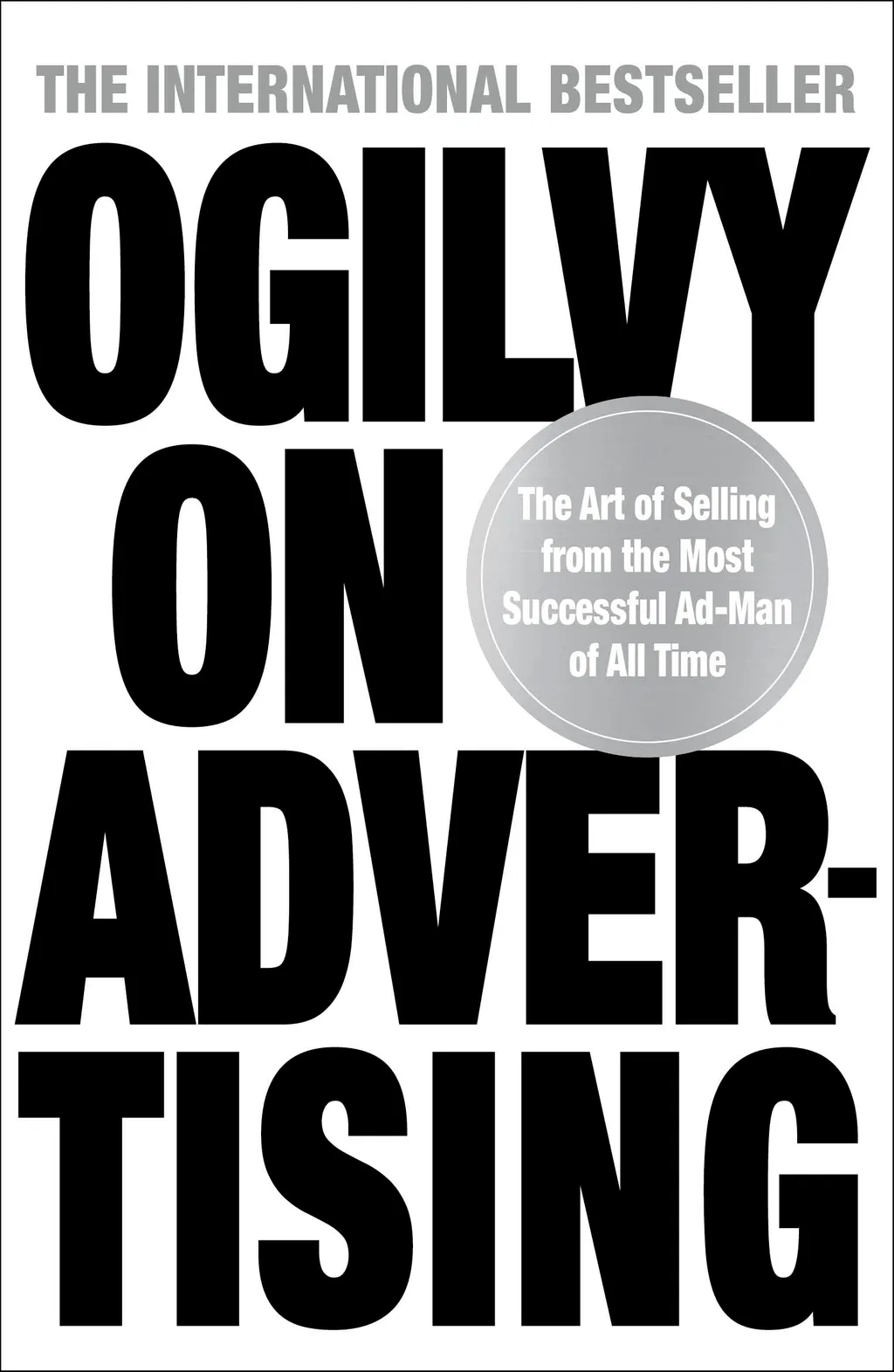
Written in 1983, after Ogilvy had retired. It reads less like theory and more like a man emptying his notebooks: rules he had already proved on Rolls-Royce, Dove, Hathaway and Schweppes, most of them backed by readership data or split tests. Half the book is about print, which dates it. The thinking underneath does not date at all.
What advertising is for
- Advertising sells. Everything else, entertainment, art, awards, is a byproduct. “If it doesn’t sell, it isn’t creative.”
- The agency motto was “We sell, or else.”
- “The consumer isn’t a moron, she is your wife” (carried over from Confessions of an Advertising Man). Don’t insult her intelligence and don’t lie to her.
- Never write an ad you would not want your own family to read.
- Good advertising kills a bad product faster than anything, because it gets more people to try it once.
Do the homework first
- Ogilvy read about the Rolls-Royce for three weeks before he found the sentence about the electric clock. The famous line was research, not inspiration.
- Study the product until you are bored with it. Then study what competitors have said and what their research shows.
- Find out how customers actually talk about the product, and which promise moves them.
- Decide positioning before anything else. What the product does and who it is for. “A dessert for adults” and “a dessert for children” produce two different campaigns.
- Then decide brand image and stick to it for years. Every ad either builds the brand or spends it.
- Make a specific promise. Vague promises are unverifiable, and unverifiable promises don’t sell.
The big idea
- “Unless your advertising contains a big idea, it will pass like a ship in the night.”
- Five tests for one: did it make me gasp, do I wish I had thought of it, is it unique, does it fit the strategy exactly, could it run for thirty years.
- Big ideas surface from the unconscious, but only if you have stuffed it with information first.
- When a campaign works, keep it running. “You aren’t advertising to a standing army, you are advertising to a moving parade.” The agency gets bored years before the audience does.
- Five times as many people read the headline as read the body copy. The headline is eighty cents of your dollar.
- Put the brand name and the promise in the headline.
- News gets 22% more recall. So do free, new, now, announcing, introducing, how to, quick, easy, wanted, the truth about, advice to.
- No puns, no blind headlines, no cleverness that needs decoding. People skim.
- Photographs beat drawings. The strongest have story appeal, the reader wonders what is going on.
- Captions are read by twice as many people as body copy, so caption every photograph with the brand and the promise.
- Long copy sells considered purchases. Readership falls fast up to fifty words, then barely moves between fifty and five hundred.
- Write body copy like one person talking to one person. Facts, plain words, no bombast.
- Set it like editorial, not like an ad. Serif type, black on white, no reverse type, no copy printed over pictures, 35 to 45 characters per line.
Television
- Identify the brand in the first ten seconds and show the package.
- What works: demonstrations, problem and solution, real users testifying, slice of life, news, emotion when the product earns it.
- Watch for vampire video, visuals so striking that viewers remember the film and forget the product.
- Ogilvy’s data put celebrity endorsements below average, for the same reason. Viewers assume the celebrity was paid, and they are usually right.
- On radio, name the brand in the first ten seconds and at least three times overall.
Direct response, his secret weapon
- Direct response people know what sells because they count replies. General advertisers argue about opinions.
- Nearly every rule above came out of direct-response evidence: long copy, plain language, repetition of winners, hard offers.
- “Never stop testing, and your advertising will never stop improving.”
- Test promises, headlines, media and frequency in a few markets before you roll anything out nationally.
- “Advertisers who ignore research are as dangerous as generals who ignore enemy signals.”
What he refused to do
- Chase creative awards. Award juries never see the sales figures.
- Let committees write. “Search all the parks in all your cities. You’ll find no statues of committees.”
- Lean on discounts, coupons and promotions as a habit. They move this quarter’s volume and eat next year’s brand.
- Run ads that entertain the agency rather than the customer.
Running the shop
- Hire people bigger than you are. “If each of us hires people who are smaller than we are, we shall become a company of dwarfs. But if each of us hires people who are bigger than we are, we shall become a company of giants.”
- Ogilvy’s list for hiring copywriters was obsessive about product curiosity and work ethic, not flair.
- Being a good client is a skill too. Brief properly, keep one decision maker, tell the agency the truth, cut the approval layers, don’t haggle the fee down and then expect the best people.